St. Nicholas of Flüe, patron of:
-Pontifical Swiss Guards
-Switzerland
-difficult marriages
-large families
-judges
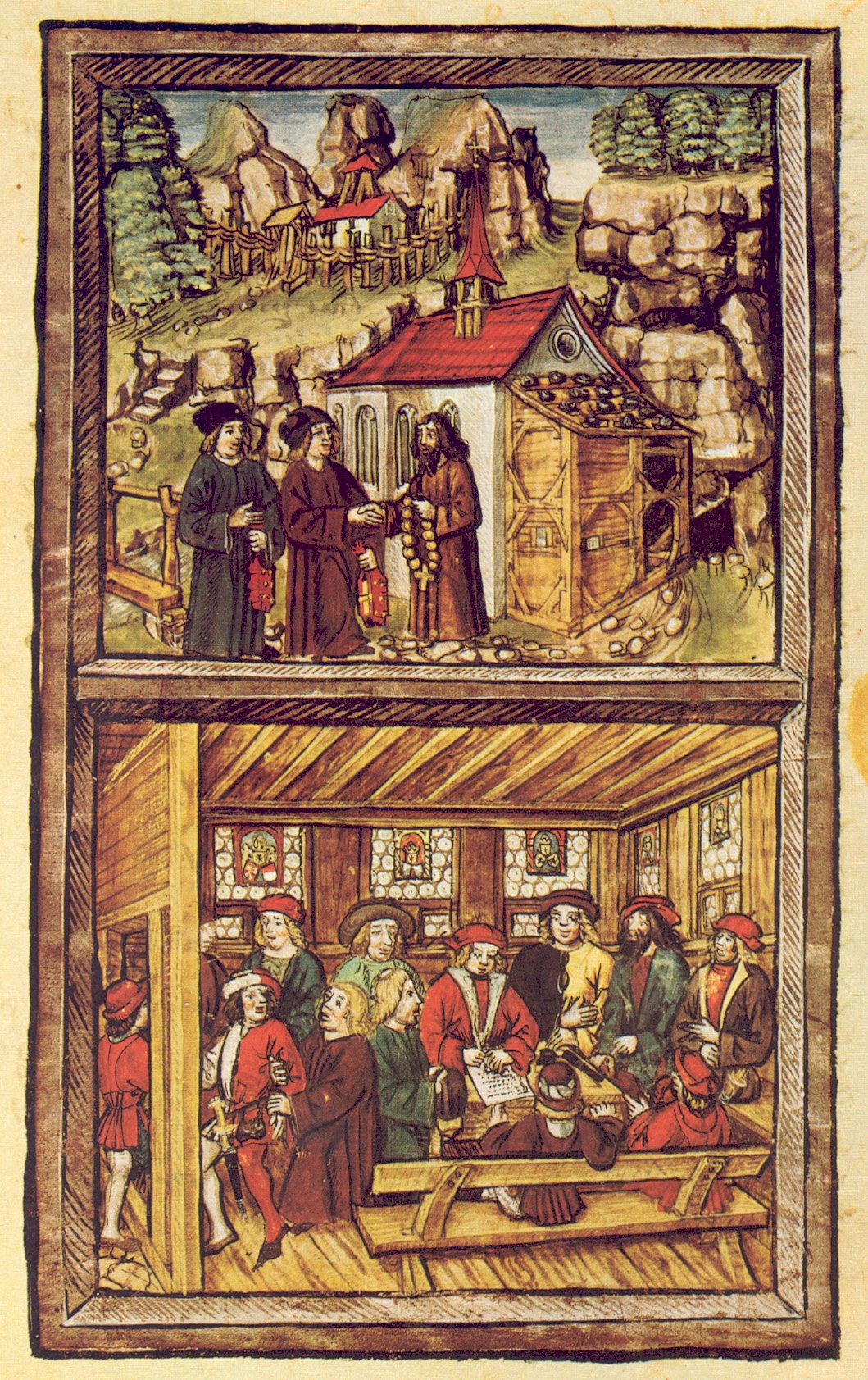
Born 21 March, 1417, on the Flüeli, a fertile plateau near Sachseln, Canton Obwalden, Switzerland; died 21 March, 1487, as a recluse in a neighboring ravine, called Ranft. He was the oldest son of pious, well-to-do peasants and from his earliest youth was fond of prayer, practiced mortification, and conscientiously performed the labor of a peasant boy. At the age of 21 he entered the army and took part in the battle of Ragaz in 1446. Probably he fought in the battles near the Etzel in 1439, near Baar in the Canton of Zug in 1443, and assisted in the capture of Zürich in 1444. He took up arms again in the so-called Thurgau war against Archduke Sigismund of Austria in 1460. It was due to his influence that the Dominican Convent St. Katharinental, whither many Austrians had fled after the capture of Diessenhofen, was not destroyed by the Swiss confederates.

The Former Dominican Convent St. Katharinental in Switzerland. Photo by Adrian Michael.
Heeding the advice of his parents he married, about the age of twenty-five, a pious girl from Sachseln, named Dorothy Wyssling, who bore him five sons and five daughters. His youngest son, Nicholas, born in 1467, became a priest and a doctor of theology. Though averse to worldly dignities, he was elected cantonal councillor and judge. The fact that in 1462 he was one of five arbiters appointed to settle a dispute between the parish of Stans and the monastery of Engelberg, shows the esteem in which he was held.