by Prof. Plinio Corrêa de Oliveira
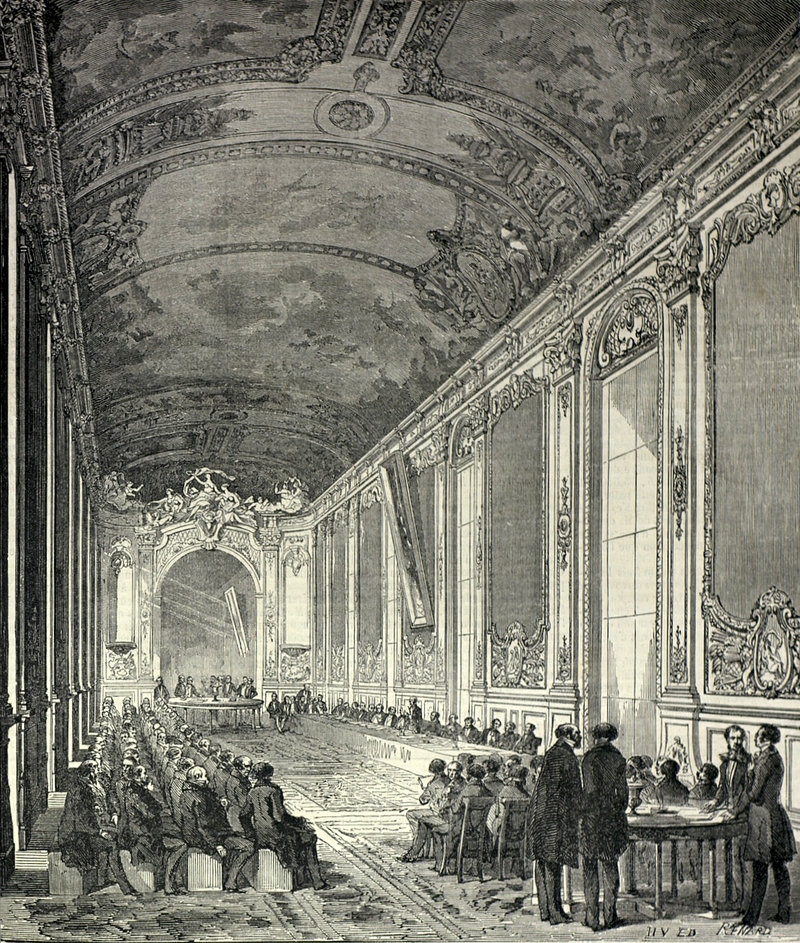
A magnificent hall with imposing dimension, pictures, mirrors, draperies and a costly and truly distinctive décor. The way the people are positioned lends a great solemnity to this gathering.
And what is it? A diplomatic congress of international importance? An assembly of the council of some monarchy? A session of a famous literary academy?
No. It is a convention of the Bank of France in 1846. Being economic in nature, it is, therefore, much more prosaic than assembly with a higher diplomatic, political or intellectual essence.
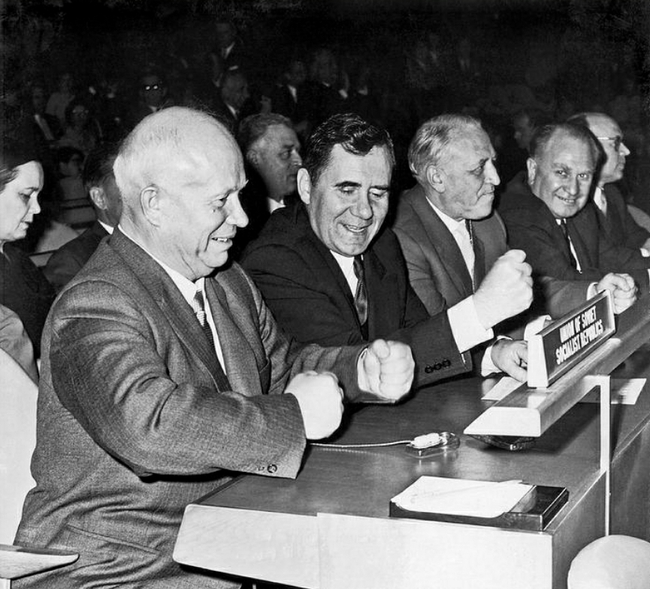
Khrushchev inaugurated, banging one’s fist.
Obviously, in 1846, exactly 116 years ago, the Revolution had made much less headway. It had not yet eliminated the mentality that all human activities of some importance should be vested with a distinction and a decorum that is, in final analysis, an expression of the proper dignity of man.
In 1846, even the conventions that were merely economic in nature had a noble, elevated and distinguished tone.
Today, even the highest political assemblies have a “commercial” triviality often reminiscent of the local tavern atmosphere.
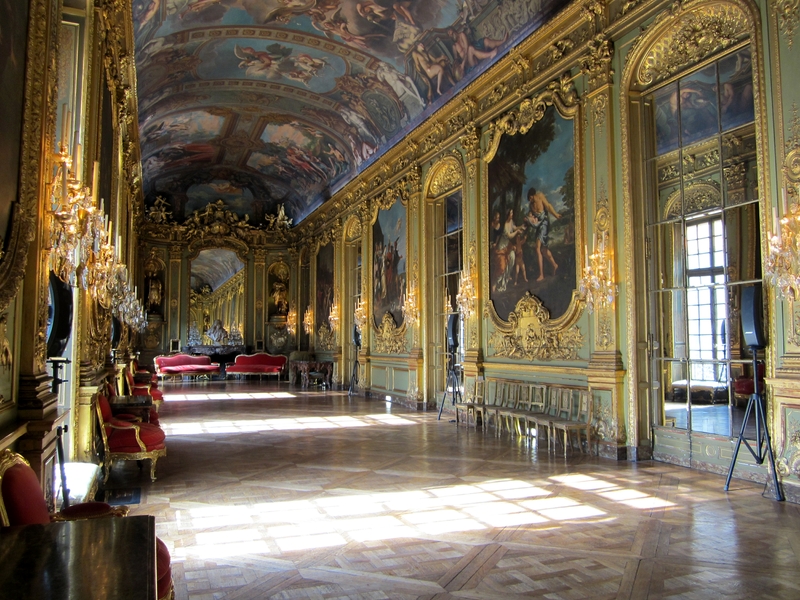
“Galerie Dorée” of the Bank of France, today.
For example, is there not something very trivial about the whole physiognomy, the whole ambience and the whole tone of this UN assembly? The tavern atmosphere was never so apparent as now, after that ruffian Khrushchev inaugurated the new Soviet “style” of manifesting disagreement in full session ― banging one’s fist strongly on a table.
“Temporar mutantur . . .”

Ambience Customs & Civilization, “Catolicismo No. 134” – February 1962