St. John Chrysostom
(Chrysostomos, “golden-mouthed” so called on account of his eloquence).
Doctor of the Church, born at Antioch, c. 347; died at Commana in Pontus, 14 September, 407.
John — whose surname “Chrysostom” occurs for the first time in the “Constitution” of Pope Vigilius (cf. P.L., LX, 217) in the year 553 — is generally considered the most prominent doctor of the Greek Church and the greatest preacher ever heard in a Christian pulpit. His natural gifts, as well as exterior circumstances, helped him to become what he was.

I. LIFE
(1) Boyhood
At the time of Chrysostom’s birth, Antioch was the second city of the Eastern part of the Roman Empire. During the whole of the fourth century religious struggles had troubled the empire and had found their echo at Antioch. Pagans, Manichaeans, Gnostics, Arians, Apollinarians, Jews, made their proselytes at Antioch, and the Catholics were themselves separated by the schism between the bishops Meletius and Paulinus. Thus Chrysostom’s youth fell in troubled times. His father, Secundus, was an officer of high rank in the Syrian army. On his death soon after the birth of John, Anthusa, his wife, only twenty years of age, took the sole charge of her two children, John and an elder sister. Fortunately she was a woman of intelligence and character. She not only instructed her son in piety, but also sent him to the best schools of Antioch, though with regard to morals and religion many objections could be urged against them. Beside the lectures of Andragatius, a philosopher not otherwise known, Chrysostom followed also those of Libanius, at once the most famous orator of that period and the most tenacious adherent of the declining paganism of Rome. As we may see from the later writings of Chrysostom, he attained then considerable Greek scholarship and classical culture, which he by no means disowned in his later days. His alleged hostility to classical learning is in reality but a misunderstanding of certain passages in which he defends the philosophia of Christianity against the myths of the heathen gods, of which the chief defenders in his time were the representatives and teachers of the sophia ellenike (see A. Naegele in “Byzantin. Zeitschrift”, XIII, 73-113; Idem, “Chrysostomus und Libanius” in Chrysostomika, I, Rome, 1908, 81-142). 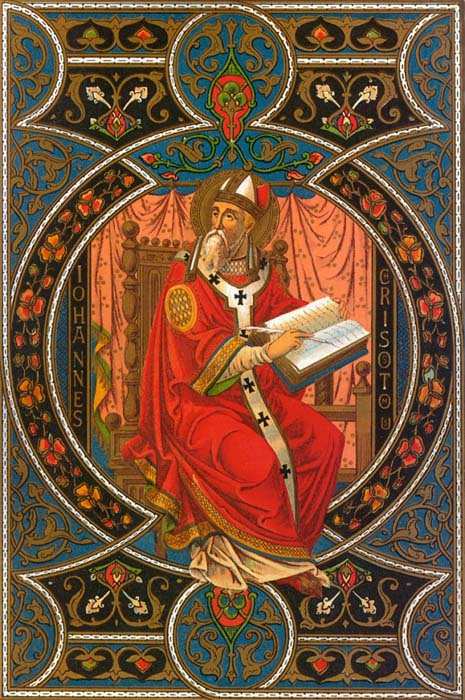
(2) Chrysostom as Lector and Monk