Revolution and Counter-Revolution – Twenty Years After – Part III, Chapter I and II
PART III
Revolution and Counter-Revolution
TWENTY YEARS AFTER
In 1976 the author was asked to write a preface to a new Italian edition of Revolution and Counter-Revolution. He deemed it better, instead, to present an analysis of the evolution of the revolutionary process in the nearly twenty years since the essay’s first edition. He therefore added this third part, which was first published in 1977. In 1992, in the aftermath of the fall of the Iron Curtain, the author updated this analysis with some commentaries published herein. – Ed.
CHAPTER I
The Revolution: A Process in Continual Transformation
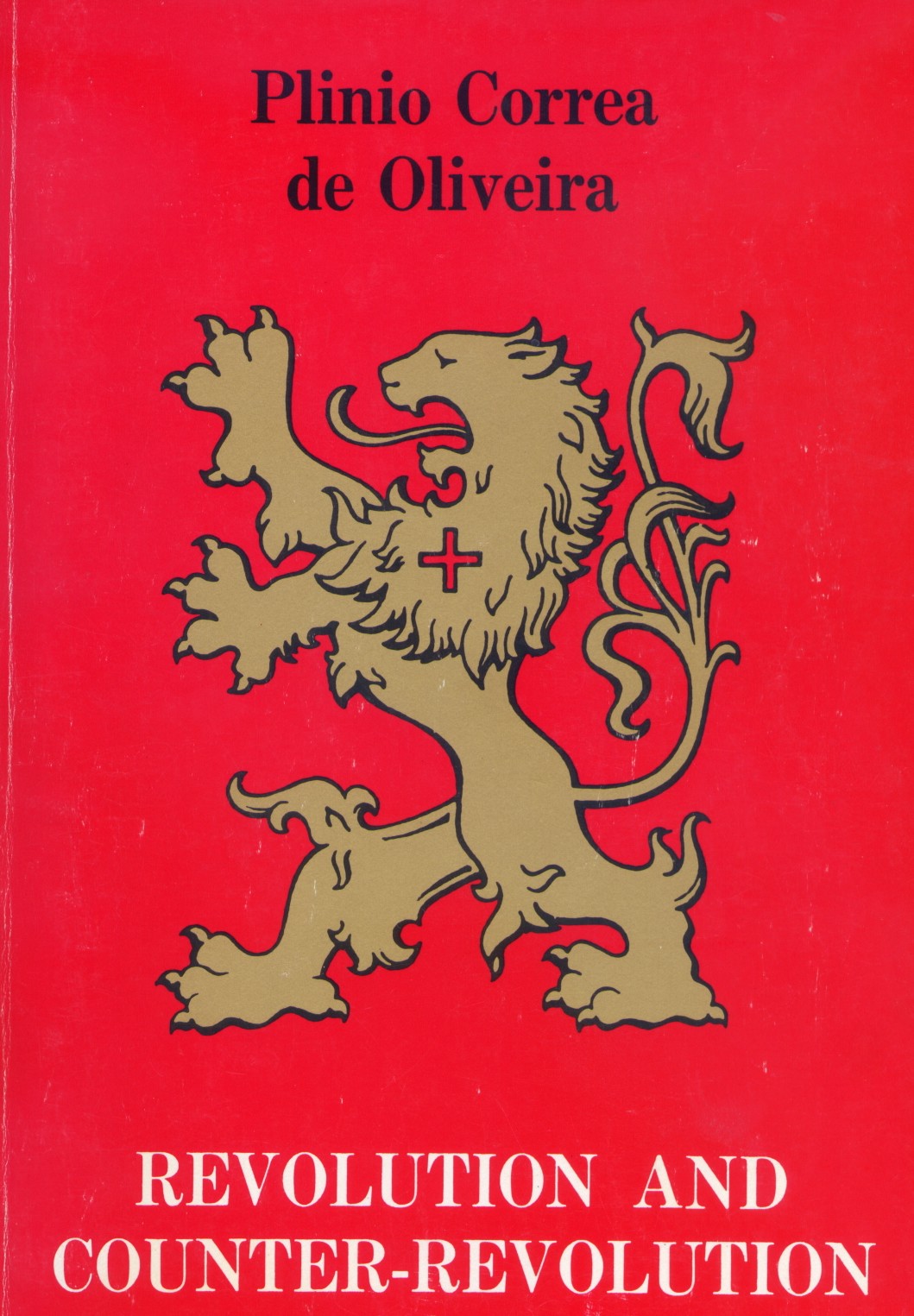
Revolution and Counter-Revolution second English edition
Since so much time — marked by so many events — has elapsed since the first edition of Revolution and Counter-Revolution, one could fittingly ask if there is anything to be added regarding the matters treated in the essay. The answer could only be yes, as the reader will see.
1. Revolution and Counter-Revolution and the TFPs: Twenty Years of Action and Combat
Twenty Years After, the title of a novel by Alexandre Dumas — so appreciated by Brazilian adolescents until the moment now long past when profound psychological transformations destroyed the taste for that kind of literature — is brought to mind by an association of images as we begin these notes.

Alexander Dumas
We just looked back to 1959; 1976 is almost over. Therefore, we are approaching the end of the second decade of this book’s circulation. Twenty years…
In this period, the essay’s editions have multiplied.1 *Updated Footnote 2021*
It was not our intention to make Revolution and Counter-Revolution a mere study. We wrote it also with the intention of making it a bedside book for about one hundred young Brazilians who had asked us to orient and coordinate their efforts in view of the problems and duties they faced at the time. This initial handful — the seed of the future TFP — soon spread throughout Brazil, which is the size of a continent.
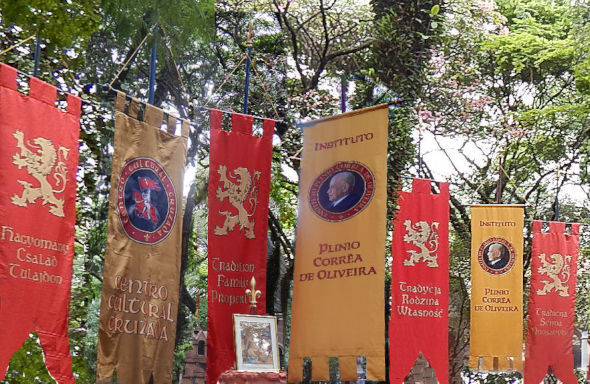
Some of the various TFP banners from around the world.
Propitious circumstances favored, pari passu, the formation and development of analogous and autonomous organizations throughout South America. The same occurred later in the United States, Canada, Spain, and France. More recently, intellectual affinities and promising cordial relations began to link this extensive family of organizations to personalities and associations of other countries of Europe. In France, the Bureau Tradition, Famille, Propriété,2 founded in 1973, has been fostering the resulting contacts and approximations as much as possible.
These twenty years, then, were years of expansion. They were years of expansion, yes, but years of intense counter-revolutionary struggle as well.

TFP Student Action…various campaigns that the TFP have been doing over the years…Subscribe today by clicking on the picture!
Considerable results have been achieved in this way. As this is not the moment to enumerate them all,3 we limit ourselves to saying that, in each country where a TFP or a similar association exists, it has been continuously combating the Revolution, that is, more particularly, so-called Catholic leftism in the religious realm and communism in the temporal realm. In the genuine combat against communism, we include the battle against all modes of socialism, for these are merely preparatory stages or larval forms of communism. This combat has always been waged according to the principles, goals, and norms of Part II of this study.4
The fruits thus obtained well show the accuracy of what is said in this work on the inseparable themes of Revolution and Counter-Revolution.

2. In a World in Continuous and Rapid Transformation, Is Revolution and Counter-Revolution Still Current? …
…The Answer Is Affirmative
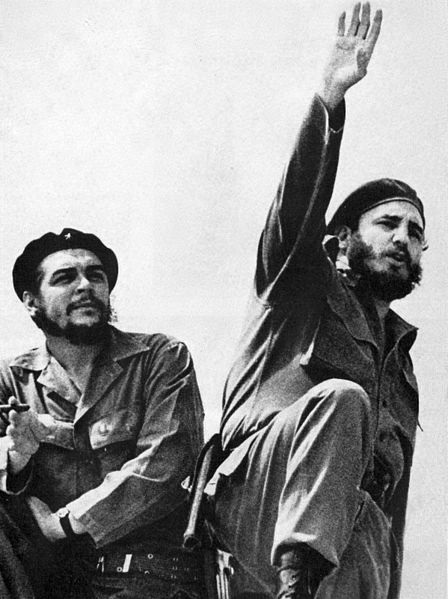
Two Revolutionary leaders, Che Guevara & Fidel Castro.
At the same time that the editions and fruits of Revolution and Counter-Revolution were multiplying on six continents,5 the world — impelled by the revolutionary process that has been dominating it for four centuries — underwent such rapid and profound changes that, as we launch this new edition, it is appropriate to ask, as we have already said, whether on account of these changes something should be rectified or added in regard to what we wrote in 1959.
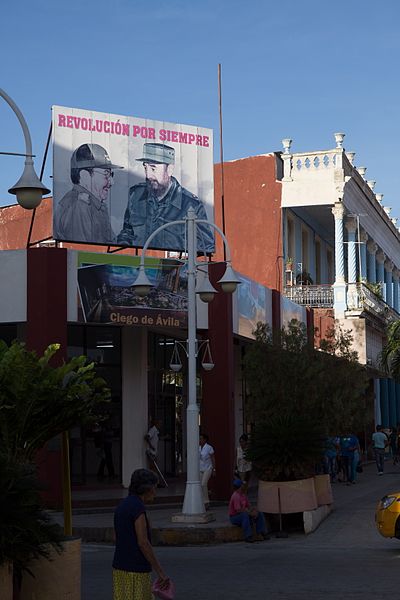
Picture of Fidel and Raul Castro in Cuba, Ciego de Ávila, provincial capital. Caption is “revolution forever”. Photo by Christian Pirkl.
Revolution and Counter-Revolution is situated sometimes in the theoretical field and sometimes in a theoretic-practical field very close to pure theory. Thus, it should not surprise anyone if in our judgment no event has altered the study’s content.

Protesters on the streets of Cuba, July 11, 2021. Cuban’s are asking for an end to the communist tyranny that has dominated Cuba for 62 long and tragic years. As Mr. Sergio de Paz, a Cuban exile, said: “They’re not asking for food. They’re not asking for vaccines. They’re asking to be free from this regime.” Photo by 14ymedio.
Assuredly, many of the methods and styles of action used by the Brazilian TFP, which was being formed in 1959 — and by its sister organizations — were replaced or adapted to the new circumstances. Others were introduced. However, as all these methods and styles are situated in an inferior field that is effectual and practical, Revolution and Counter-Revolution does not address them. Accordingly, nothing in the text needs to be modified.

One of the many campaigns that the TFP has done over the years, this one to stop the oppression of the Communist Cuban Government!
All this notwithstanding, there would be much to add if we wished to relate Revolution and Counter-Revolution to the new horizons that history is opening. But this would not fit in a simple supplement. We do think, though, that a summary of what the Revolution did in these twenty years — a review of the world scene as transformed by it — would help the reader to easily and conveniently relate the study’s contents to present reality. This we shall proceed to do.

1. Besides two initial printings in Catolicismo, Revolution and Counter-Revolution, in book form, has had two editions in Portuguese, three editions in Italian (one in Turin, two in Piacenza), one in German, six in Spanish (one in Barcelona, one in Bilbao, one in Santiago, Chile, one in Colombia, and two in Buenos Aires), three in French (in Brazil, Canada, and France), and four in English (Fullerton, California, New Rochelle, New York, York and Spring Grove, Pennsylvania). It has also been transcribed in full in the magazines Qué Pasa? (Madrid) and Fiducia (Santiago, Chile). These editions total over 100,000 copies. – Ed.
UPDATE: It is also available in Polish, Romanian, Japanese, Estonian, Lithuanian, Ukrainian, Russian, Hungarian, Suomi/Finnish, Latvian and Bielorusso. Each language is linked to the RCR text in that respective language.
2. Now the Association Française pour la Défense de la Tradition, de la Famille et de la Propriété.
3. See the book Um homem, uma obra, uma gesta — Homenagem das TFPs a Plinio Corrêa de Oliveira (São Paulo: Edições de Amanhã, 1989), which includes ample historical data on TFPs and TFP Bureaus in 22 countries on six continents. – Ed.
4. Regarding the fight against the more recent forms of socialism, Prof. Plinio Corrêa de Oliveria’s What Does Self-Managing Socialism Mean for Communism: A Barrier? Or a Bridgehead? deserves special mention. It was widely published in 1982 (in 50 major Western newspapers and magazines, with a total of over 33 million copies). This publication prompted Friedrich A. Hayek, Noble Prize winner in economics, to write a letter of high praise. Also of great interest are the books España, anestesisda sin percribilo, amordazada sin saberlo, extraviada sin quererlo: la obra del PSOE and Ad perpetuam rei memoriam, published by the Spanish TFP in 1988 and 1991 respectively. – Ed.
5. Revolution and Counter-Revolution has also significant circulation in Australia, South America, and the Philippines. – Ed.

CHAPTER II
The Apogee and Crisis of the Third Revolution
1. The Apogee of the Third Revolution
As we have seen,1 three great revolutions constituted the chief stages of the process to gradually demolish the Church and Christian civilization: in the sixteenth century, humanism, the Renaissance, and Protestantism (First Revolution); in the eighteenth century, the French Revolution (Second Revolution); and in the second decade of this century, Communism (Third Revolution).

Tired of the guillotine, the French Revolutionaries turned to another horrible method of dying called noyades. Between 90 to 150 people being stowed in the hold of a vessel, the vessel was scuttled in mid-stream, and the victims drowned. This particular method was carried out by Jean-Baptiste Carrier. Priests and nuns were among those murdered in this barbaric manner.
These three revolutions can only be understood as parts of an immense whole that is the Revolution.
Since the Revolution is a process, it is obvious that, from 1917 to the present, the Third Revolution has continued its course. It is now at a true apogee.
 When we consider the territories and populations subject to communist regimes, we see that the Third Revolution holds sway over a world empire without precedent in history. This empire is a continuous cause of insecurity and disunion among the greatest noncommunist nations. Moreover, the leaders of the Third Revolution control the strings that move, throughout the noncommunist world, the openly communist parties and the immense network of cryptocommunists, paracommunists, and useful idiots infiltrated not only into the noncommunist, socialist, and other parties, but also into the churches,2 professional and cultural associations, banks, the press, television, radio, the movie industry, and the like.

Martin’s Patershof hotel, a former Catholic Church owned and run by the Friar Minors. Established in Mechelen, Belgium around 1231, it was converted into a hotel in 2006. Photo by visitflanders.
And as if this were not enough, the Third Revolution applies with devastating efficacy — as we shall subsequently explain — the tactics of psychological conquest. With these tactics, communism is succeeding in reducing immense segments of the noncommunist Western public opinion to a foolish apathy. Such tactics enable the Third Revolution to expect, in this terrain, yet more remarkable successes that are even more disconcerting to observers who analyze events from outside the Third Revolution.

Commentary
Crisis in the Third Revolution: An Inevitable Fruit of the Marxist Utopias
The international dimensions of the Third Revolution’s apogee was already notorious, as the text notes. With the passing of time, the general picture of this apogee became even clearer, whether on account of the geographical and populational expansion of communist domination, the worldwide diffusion of Red propaganda and the weight of the communist parties in the Western world, or the penetration of communist tendencies into national cultures.

Willy Brandt (left) and Willi Stoph in Erfurt 1970. Egon Bahr, a former journalist was the creator of the Ostpolitik and served as Secretary under West German Chancellor Socialist Democrat, Willy Brandt, fourth Chancellor of the Federal Republic of Germany from 1969 to 1974. Influenced by Egon Bahr, who proposed “change through rapprochement” in a 1963 speech, the policies were implemented. Photo by Srittau.
These factors — heightened by a global panic of the atomic threat that Soviet aggressiveness posed to all continents — led to a policy of almost universal softness and capitulation in relation to Moscow: the German and Vatican Ostpolitiken, the sweeping wind of unconditional pacifism, the proliferation of political slogans and formulas that prepared so many bourgeois to view the triumph of communism as inevitable in the near future.
Have we not all lived under the psychological pressure of this leftist optimism, which was enigmatic as a sphinx for the indolent centrists and threatening as a leviathan for those — like the TFPs and followers of Revolution and Counter-Revolution in so many countries — who well discerned the “apocalypse” to which this was leading?
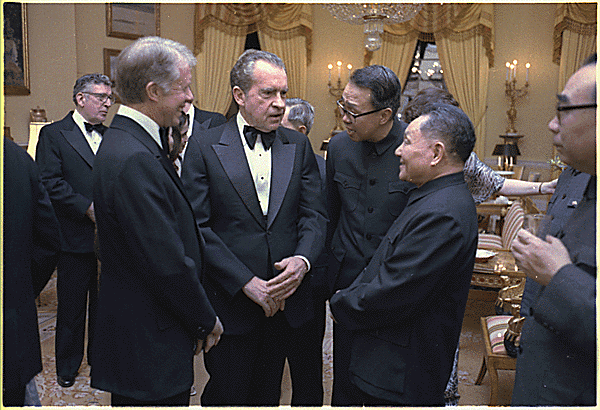
Former President Richard Nixon, President Jimmy Carter, and Chinese Deputy Premier Deng Xiaoping speak at a state dinner in honor of Deng’s visit to the United States. This visit followed the reestablishment of full diplomatic relations between the United States and China, Washington, D. C., January 29, 1979 (aka. Raising the Bamboo Curtain). Deng Xiaoping, a proud follower of Marxism–Leninism, who traveled to Moscow to study Communism fully, was a Chinese revolutionary and statesman and is noted for leaving in place a communist government that continues to exist today.
How few then were those who perceived that this leviathan was afflicted by a worsening crisis it could not overcome since it was an inevitable fruit of Marxist utopias!
This crisis now seems to have disintegrated the leviathan. But, as will be seen further on, this disintegration has spread an even more deadly climate of crisis throughout the world.
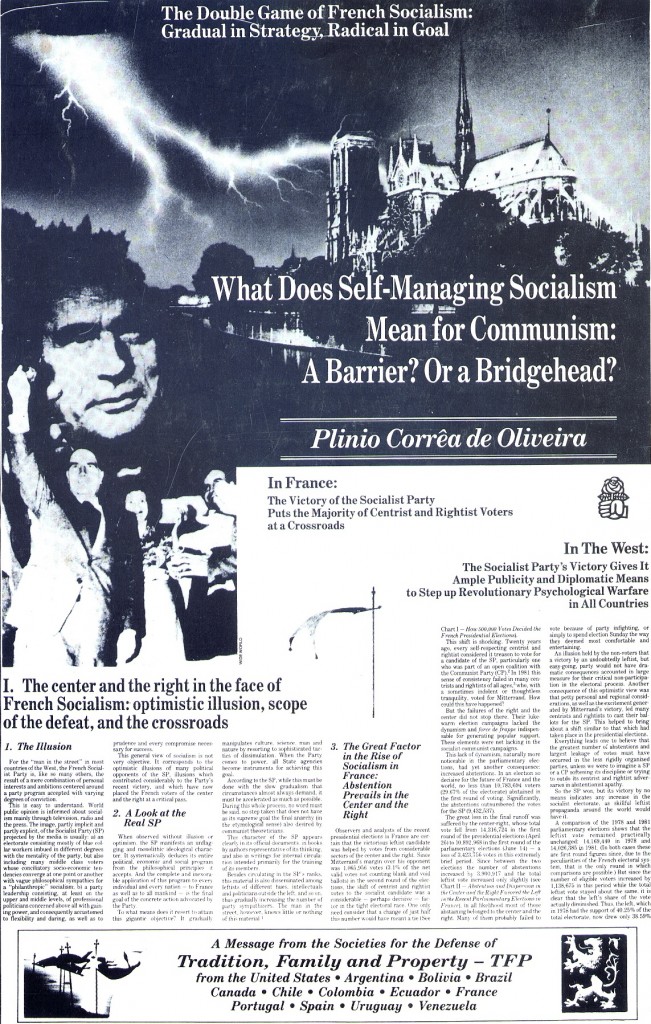
In 1981, his manifesto titled, “What Does Self-Managing Socialism Mean for Communism: A Barrier? Or a Bridgehead?” drew worldwide repercussion. It is a critical analysis of French President Mitterrand’s self-managing socialism. This is available as an e-book! Click picture to be directed to the TFP Store to get your free copy today!
The inertia — when not the overt and substantial collaboration — of so many “democratic” governments and crafty private economic powers of the West in face of communism (already so powerful) paints a dreadful global panorama.

In 1990, Lithuania sought freedom from the tyranny of Soviet communism. In a worldwide effort, the TFPs collected more than five million signatures, in what the 1993 Guinness Book of World Records termed the largest verifiable petition drive in history.
Under these conditions, should the course of the revolutionary process continue as it has heretofore, it is humanly inevitable that the general triumph of the Third Revolution will ultimately impose itself on the whole world. How soon? Many would be alarmed if; as a mere hypothesis, we were to suggest twenty years. To them, this period would seem surprisingly brief. In reality, who can guarantee that this outcome will not take place within ten years, five years, or even less?
These are only a few examples of how widespread Communism is!
The proximity, indeed the eventual imminence, of this utter devastation is indubitably one of the notes that indicate the greatest change in the world conjuncture when we contrast the horizons of 1959 and 1976.
A. On the Road to Its Apogee, the Third Revolution Studiously Avoided Total and Useless Adventures
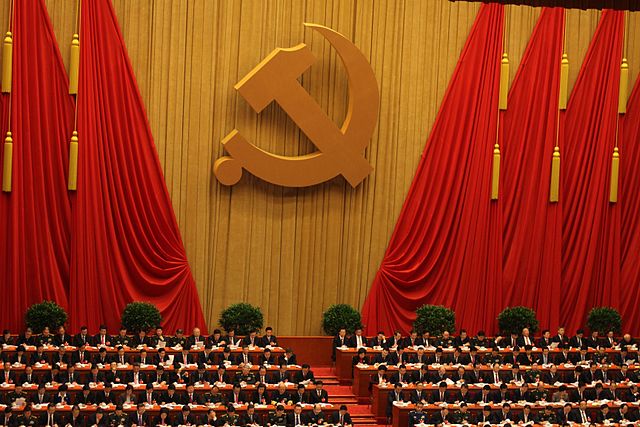
National Congress of the Communist Party of China
Even though the mentors of the Third Revolution have the capacity to launch themselves at any moment in an adventure for the complete conquest of the world by a series of wars, political blows, economic crises, and bloody revolutions, clearly such an adventure presents considerable risks. The mentors of the Third Revolution will accept running these risks only if it seems indispensable to them.

Joseph Stalin and Nikita Khrushchev in 1936.
B. Adventure in This Revolution’s Next Stages?

Mar 14, 2012,Secretary Clinton and Vice President Biden hosted a lunch in honor of Vice President of the People’s Republic of China, Xi Jinping. Xi is the first leader of the Central Committee of the Chinese Communist Party, and has been the paramount leader of China since 2012.
The success of the usual methods of the Third Revolution is endangered by the rise of unfavorable psychological circumstances that have become strongly accentuated over the last twenty years.
Will such circumstances compel communism to choose adventure henceforth?
In effect, if continuous use of classic methods carried communism to the pinnacles of power without exposing the revolutionary process to risks not carefully circumscribed and calculated, it is understandable that those who guide the universal Revolution hope to attain total world domination without exposing their work to the risk of irreparable catastrophes, inherent to every great adventure.
COMMENTARY
Perestroika and Glasnost: Dismantling the Third Revolution or Metamorphosing Communism?

Preserved part of “iron curtain” in the Czech Republic. A watchtower, dragon’s teeth and electric security fence are visible. Photo by Pudelek.
At the end of 1989, the highest directors of international communism decided the moment had finally arrived to initiate communism’s greatest political maneuver. This maneuver would consist in demolishing the Iron Curtain and the Berlin Wall. Its effects would coincide with the implementation of the “liberalizing” programs of glasnost (1985) and perestroika (1986) so as to precipitate the apparent dismantling of the Third Revolution in the Soviet world.
In turn, this dismantling would gain for its chief promoter and executor, Mikhail Gorbachev, the emphatic sympathy and unreserved confidence of Western governments and of numerous private economic powers of the West. From these, the Kremlin could expect a massive inflow of financial resources for its empty coffers.
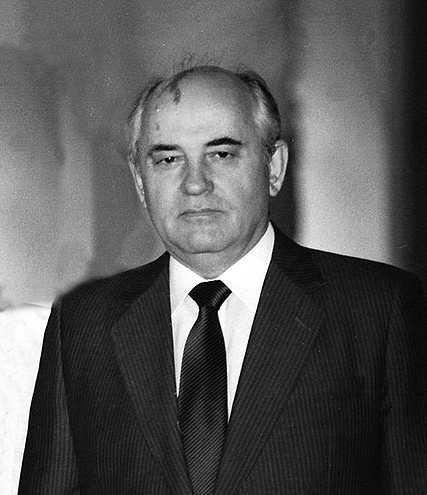
Communist President of the USSR, Mikhail Gorbachev in 1989.
The ample fulfillment of this expectation enabled Gorbachev and crew to continue floating, tiller in hand, on a sea of misery, indolence, and inaction that the unhappy Russian populace, until recently subjected to complete state capitalism, continues to face with disconcerting passivity. This passivity is propitious to the generalization of moral apathy and chaos and perhaps to the formation of an internal contentious crisis that could degenerate into a civil or world war.3
Such was the setting when the sensational and hazy events of August 1991 broke out, with Gorbachev, Yeltsin, and others as protagonists, in this game that paved the way first for the transformation of the U.S.S.R. into a loose confederation of states and afterwards for its dissolution.

President Bill Clinton and Russian President Boris Yeltsin, 1999.
There is talk of the prospective fall of Fidel Castro’s regime in Cuba and the possible invasion of Western Europe of hordes of famished people from the East and the Maghreb. The several attempts made by multitudes of needy Albanians to enter Italy could have been a heralding of this new “barbarian invasion.”
In the Iberian Peninsula, as in other parts of Europe, there are some who associate these hypotheses with the effects of the presence of multitudes of Mohammedans casually admitted in previous years at several points of the continent and with construction projects for a bridge over the strait of Gibraltar, which would facilitate further Moslem invasions of Europe.
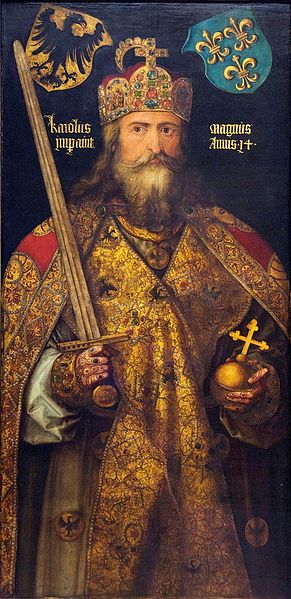
Charlemagne, painted by Albrecht Dürer
There would be a curious similarity of effects between the fall of the Berlin Wall and the building of this bridge: Both would open the European continent to invasions analogous to those Charlemagne victoriously repelled, namely, the barbarian or semi-barbarian hordes from the East and the Mohammedan hordes from regions south of the European continent.
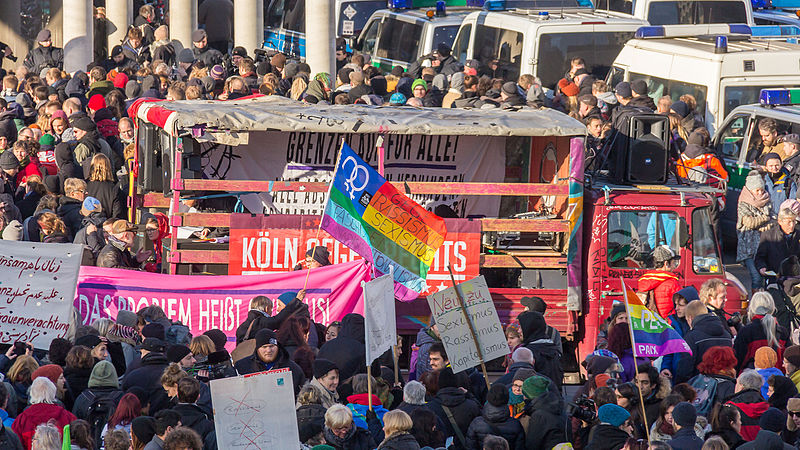
One would think this was a homosexual rally with all their “rainbow” flags, yet this is a Pro-Immigration Rally for the Syrian Refugess in Germany, 2016. “Open Borders for All!” the banner reads. Photo by Raimond Spekking.
One would say that the premedieval scenario is repeated. Yet, something is missing; the ardor of springtime faith among the Catholic populations called to confront both impacts simultaneously. Above all, someone is lacking: Where can one find today a man on par with Charlemagne?
Were we to imagine the development of these hypotheses in the West, the magnitude and drama of their consequences would certainly astound us — even though our overview does not encompass all the consequences being predicted by experts from different intellectual circles and by objective media.
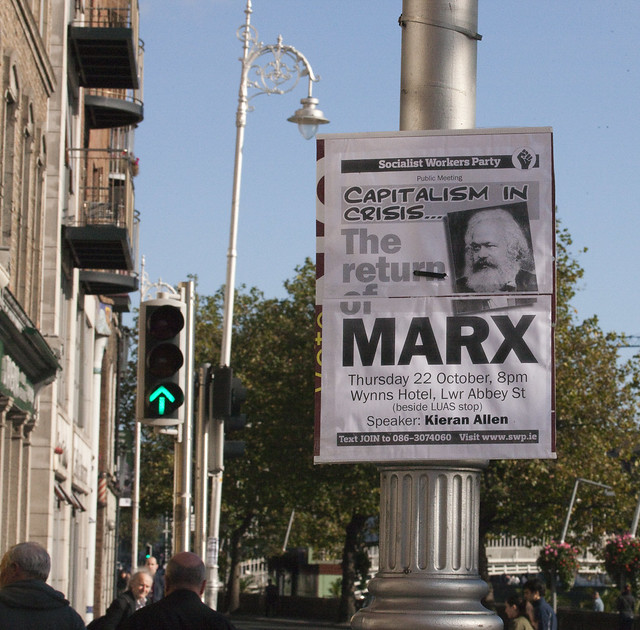 For example, there is a growing opposition between consumer countries and poor countries, that is, between rich industrialized nations and nations that are mere producers of raw materials. This opposition is expected to result in a world-wide clash between two sets of ideologies: one in favor of unlimited enrichment; the other, of “miserabilist” subconsumerism. This eventual clash inevitably brings to mind the class struggle proclaimed by Marx. Therefore we ask: Will this struggle be a projection, on a world scale, of a clash analogous to the one Marx envisioned primarily as a socioeconomic phenomenon within nations, a struggle that will involve every nation according to its own characteristics?
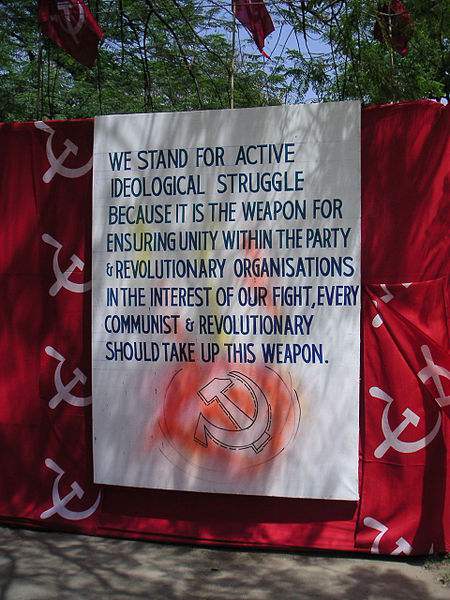
A 2005 Banner at the 18th Congress of Communist Party of India (Marxist). Photo by Soman.
If this happens, will the struggle between the First and Third Worlds become a disguise by which a metamorphosed Marxism, shamed by its catastrophic socioeconomic failure, tries, with renewed chances of success, to attain the final victory, a victory that, so far, has eluded Gorbachev, who though certainly not the doctor is at least the bard and prestidigitator of perestroika?
Yes, of perestroika, which is undoubtedly a refinement of communism, as confessed by its author in his propagandistic essay Perestroika: New Thinking for Our Country and the World.

BLM protest in Berlin, Germany 2020.
“The aim of this reform is to ensure…the transition from an excessively centralized management system relaying on orders, to a democratic one, based on a combination of democratic centralism and self-management.”4
And what is this self-management if not “the supreme objective of the Soviet state,” as established in the Preamble to the Constitution of the former U.S.S.R.?

2. Unanticipated Obstacles To The Third Revolution’s Use Of Classic Methods
A. The Decline of Persuasive Power
Let us examine the circumstances that may force communism to choose the path of adventure.
The first is the decline of the persuasive power of communist proselytism.
There was a time when explicit and categorical indoctrination was international communism’s principal recruiting method.

Lebensborn e.V. (literally: “Fount of Life”) was an SS-initiated, state-supported, registered association in Nazi Germany…aka “Nazi “baptism”. Photo credit: Bundesarchiv, Bild 146-1981-075-01 / CC-BY-SA 3.0. Communism then and….
For reasons too extensive to enumerate, conditions have become considerably adverse to such indoctrination in almost all the West and in vast segments of public opinion. Communism’s dialectics and its full and open doctrinal propaganda have visibly declined in persuasive power.
This explains why in our days communist propaganda is carried out in an increasingly disguised, mild, and gradual way.

Communism today….”Its disguise is effected either by spreading sparse and veiled Marxist principles through socialist literature”…Critical Race Theory being just one example of a continuation of Marxist indoctrination.
Its disguise is effected either by spreading sparse and veiled Marxist principles through socialist literature, or by instilling in the culture of the establishment itself certain principles that, like seeds, later bear fruit, leading centrists to an inadvertent and gradual acceptance of the communist doctrine in its entirety.
B. The Decline in the Capacity of Leadership

One of the many entrances to CHAZ / CHOP, (Capitol Hill Occupied Protest/Capitol Hill Autonomous Zone), in Seattle, Washington and covering 6 blocks and a park. Protestors were supporters of BLM, Antifa, Communism, Anti-police, homosexuality and immunity from prosecution from damages done by protestors. Photo by Derek Simeone.
This decrease in the Red creed’s direct persuasive power over the multitudes — which the recourse to these indirect, slow, and laborious methods denotes — is accompanied by a correlative decline in communism’s leadership capacity.
Let us examine how these correlative phenomena are manifested and what their fruits are.
— Hatred, Class Struggle, Revolution
Essentially, the communist movement is and considers itself to be a revolution born of class hatred. Violence is the method most consistent with it. This is the direct and fulminating method, from which the mentors of communism expected the greatest results with the least risk in the shortest possible time.

U.S. Border Patrol Agents behind a protective barricade around the Federal building in Portland, Oregon, July 25, 2020. Another BLM/Antifa protest.
This method presupposes a leadership capacity in the communist parties. In the past, this capacity enabled them to create discontent, transform it into hatred, articulate this hatred in an immense conspiracy, and thus succeed, with the “atomic” force of this hatred’s impetus, in destroying the present order and implanting communism.
— The Decline in Guidance of Hatred and in Use of Violence
But the capacity to guide hatred is also slipping from the hands of the communists.
We will not extend this writing by going into an explanation of the complex causes of this fact. We limit ourselves to observing that violence resulted in fewer and fewer advantages for the communists during these twenty years. To prove this, we need only recall the invariable failure of the guerrilla warfare and terrorism spread throughout Latin America.

A view of the bombing of the U.S. Embassy in Beirut caused by the terrorist Islamic Jihad Organization and Hezbollah on April 18, 1983.
It is quite true that violence has been dragging virtually all of Africa toward communism. But this says very little about the tendencies of public opinion in the rest of the world. The primitivism of most of Africa’s aboriginal populations places them in special and unequivocal conditions. The growth of violence there has been due not so much to ideological motives as to anti-colonialist resentments, which communist propaganda exploited with its customary astuteness.
— The Fruit and Proof of This Decline: The Third Revolution Metamorphoses Into a Smiling Revolution
The clearest proof that over the last twenty or thirty years the Third Revolution has been losing its capacity to create and direct the revolutionary hatred lies in its self-imposed metamorphosis.
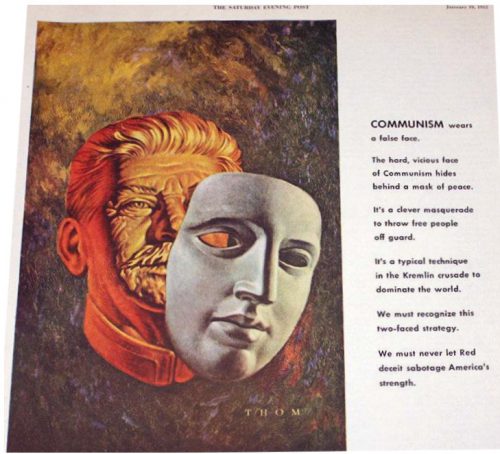
A 1952 Ad of the False Face of Communism in the Saturday Evening Post Magazine.
During the post-Stalinist thaw with the West, the Third Revolution donned a smiling mask, exchanged polemics for dialogue, pretended to be changing its mentality and attitude, and welcomed all sorts of collaboration with the adversaries it had tried to crush through violence.
In the international sphere, the Revolution thus successively passed from the Cold War to peaceful coexistence, then to the “dropping of ideological barriers,” and finally to frank collaboration with the capitalist powers, labeled, in the language of publicity, “Ostpolitik” or “detente.”

Chinese revolutionary and statesman Deng Xiaoping, a proud follower of Marxism–Leninism, and Jimmy Carter, 1979.
In the internal sphere of the various Western countries, the politique de la main tendue (policy of the extended hand), which had been a mere artifice for deceiving a small minority of leftist Catholics during the Stalin era, became a true detente between communists and pro-capitalists. It was an ideal way for the Reds to initiate cordial relations and fraudulent approximations with all their adversaries, whether religious or temporal.
Out of this came a series of “friendly” tactics: the fellow travelers, the legalistic “Eurocommunism” (affable, and cautious toward Moscow), the “historic compromise,” and the like.
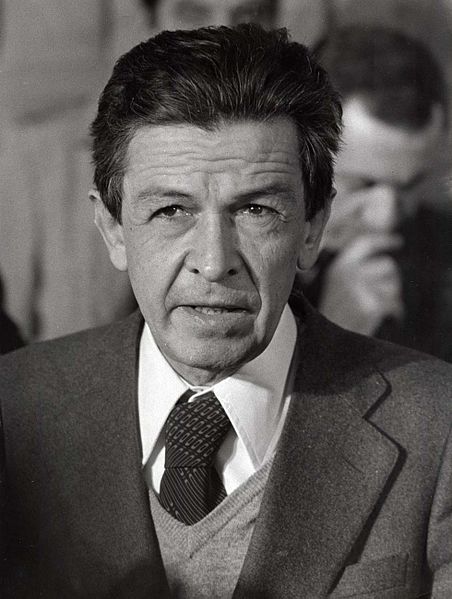
Enrico Berlinguer, leader of the Italian Communist Party and the driving force behind Eurocommunism for Italy, serving from 1972 – 1984. Despite the largest Communist support in Italy at the time, he lost an election in 1976 to Benigno Zaccagnini.
As we have said, these stratagems provide advantages for the Third Revolution today. But they are slow, gradual, and dependent on a myriad of variables for their fruition.
At the height of its power, the Third Revolution ceased to threaten and attack and began to smile and request. It ceased advancing in military cadence, shod in cossack boots, in order to progress slowly at a discreet pace. It abandoned the straight path — the shortest and chose a zigzag path marked with uncertainty.
What an enormous change in twenty years!
C. Objection: The Communist Successes in Italy and France

The Logo of Partito Comunista Italiano, aka: Italian Communist Party.
But, someone will object, the successes of these tactics in Italy and France do not permit one to affirm that communism is retreating in the free world, or even that the smiling communism of today is progressing more slowly than the scowling communism of the Lenin and Stalin years.
In 1981, his manifesto titled, “What Does Self-Managing Socialism Mean for Communism: A Barrier? Or a Bridgehead?” drew worldwide repercussion. It is a critical analysis of French President Mitterrand’s self-managing socialism. Click picture to read or download it.
First of all, in answer to this, one must say that the general elections in Sweden, West Germany, and Finland, as well as the regional elections and the present instability of the Labor Government in Great Britain, attest to the inappetence of the great masses for socialist “paradises,” communist violence, and so on.5 There are expressive signs that the example of these countries has already begun to reverberate in those two great Catholic Latin nations of Western Europe, thus hindering the communist advance.
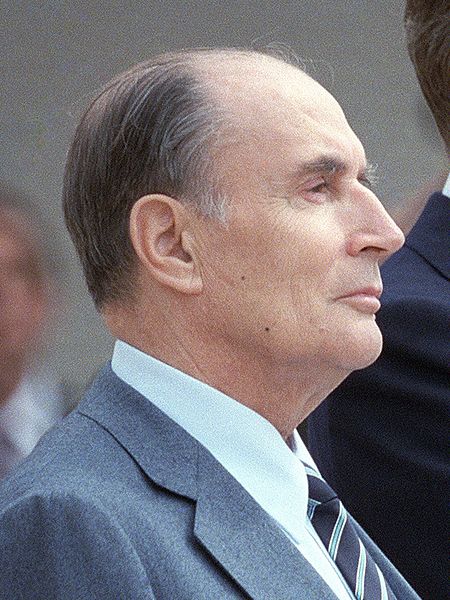
François Mitterrand, the President of France from 1981 – 1995 and he was First Secretary of the Socialist Party and the first left-wing politician to assume the presidency under the Fifth Republic.
But, in our opinion, it is necessary above all to question how authentically communist is the growing number of votes obtained by the Italian Communist party or the French Socialist party (of which we speak since the French Communist party is stagnant). Both parties are far from having benefited only from the votes of their own electorates. Certainly considerable Catholic support — whose real amplitude only history will one day reveal in its full extent — has created entirely exceptional illusions, weaknesses, apathies, and complicities around the Italian Communist party.
The electoral projection of these shocking and artificial circumstances explains, in large measure, the growth in the number of people voting for the Communist party, many of whom are by no means communist voters. Nor should we forget the direct or indirect influence of certain Croesuses upon the voting. Their frankly collaborationist attitude toward communism allows electoral maneuvers from which the Third Revolution draws an obvious profit. Analogous observations can be made in regard to the French Socialist party.

In other words, the leftist and centrist currents in favor of collaborating with communism will suffer what occurs to a train when the locomotive is suddenly braked. The car immediately behind it is hit with the shock and is pushed in a direction opposite the one it was traveling. In turn, this car transmits the shock to the second car with an analogous effect, and so on, down to the last car.
Could this present accentuating of the anti-socialist allergy be the first manifestation of a profound phenomenon destined to durably impoverish the revolutionary process? Or is it a mere ambiguous and passing spasm of common sense amid the contemporary chaos? What has occurred thus far does not yet provide grounds for an answer.
3. Metamphosed Hatred And Violence Generate Total Revolutionary Psychological Warfare
To grasp more clearly the scope of these immense changes in the communist panorama, it is necessary to analyze, as a whole, communism’s great present-day hope, namely, revolutionary psychological warfare.
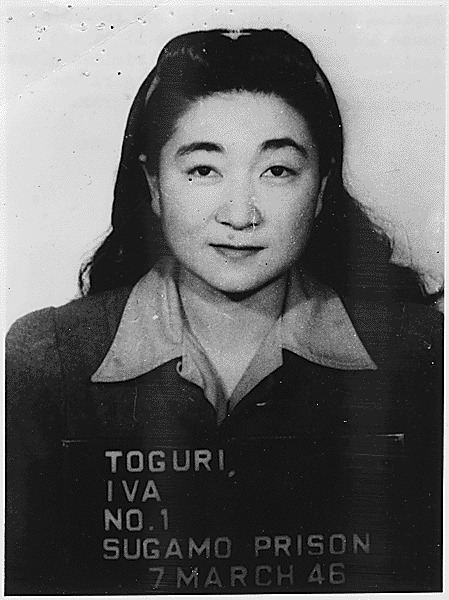
Iva Toguri, aka, Tokyo Rose, mug shot taken at Sugamo Prison on March 7, 1946. Tokyo Rose was a name given by Allied troops in the South Pacific during World War II to demoralize Allied forces abroad and their families at home by emphasizing troops’ wartime difficulties and military losses.
As we have already said, international communism — though necessarily born of hatred and turned by its own internal logic to the use of violence exercised by means of wars, revolutions, and assassinations — was compelled by great, profound changes in public opinion to dissimulate its rancor and to pretend it had desisted from these means.
Now, if such desistance were sincere, international communism would have denied itself to the point of self-destruction.

US leaflet attempting to demoralize enemy in Vietnam by saying they are fighting Mao’s fight not their own.
But this is far from being the case. Communism uses the smile only as a weapon of aggression and warfare. It does not eliminate violence but transfers it from the field of physical and palpable operations to the field of impalpable psychological actuations. Its objective: to gradually and invisibly obtain the victory in the interior of souls that it could not win through drastic and visible means, according to the classic methods, because of certain circumstances.
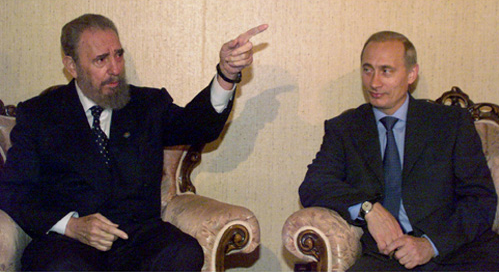
Vladimir Putin with Fidel Castro at the Millennium Summit 6-8 September 2000. Photo by DruKason2.
Of course, this is not a question of carrying out a few sparse and sporadic operations in the realm of the spirit. On the contrary, it is a question of a true war of conquest — psychological, yes, but total – targeting the whole man and all men in all countries.
COMMENTARY
Revolutionary Psychological Warfare: The Cultural Revolution and the Revolution in the Tendencies
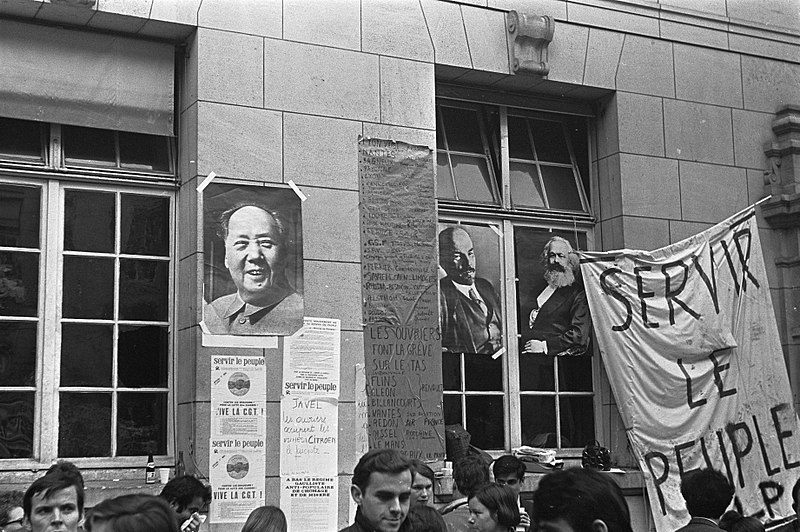
Ultra-leftist students in courtyard. Sorbonne 1968. Banner reads: “Serving the People.”
With the Sorbonne student rebellion in May 1968 numerous socialist and Marxist authors generally came to recognize the need for a form of revolution that would prepare the way for political and socioeconomic changes by influencing everyday life, customs, mentalities, and ways of living. This modality of revolutionary psychological warfare is known as the cultural revolution.
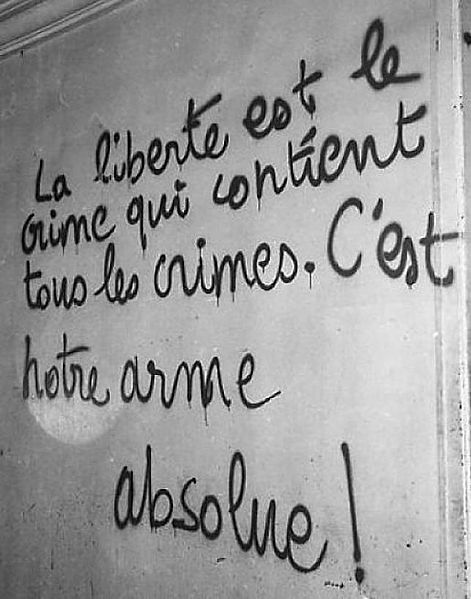
One of the many graffitis displayed during the Sorbonne revolution. This says: “Freedom is the crime that contains all crimes. It is our absolute weapon.”
According to these authors, only this preponderantly psychological and tendential revolution could change the public’s mentality to the point that would permit implementing the egalitarian utopia. Without this mental change, no structural change could last.
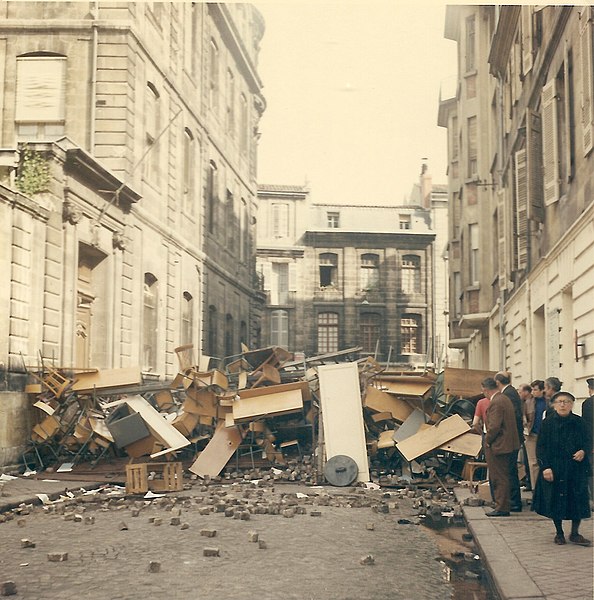
One would think this was a recent photo of CHOP/CHAZ in Oregon or Washington, but this was the Sorbonne demonstrations of May 1968 in Bordeaux (Gironde, France) – on Rue Paul-Bert.
This concept of cultural revolution encompasses what the 1959 edition of Revolution and Counter-Revolution termed the “Revolution in the tendencies.”6

Translated from French…“It is forbidden to forbid.”
We insist on this concept of total revolutionary psychological warfare. In fact, psychological warfare targets the whole psyche of man. That is, it acts on him in the various powers of the soul and in every fiber of his mentality. It targets all men: partisans or sympathizers of the Third Revolution as well as neutrals and even adversaries. It uses any means.
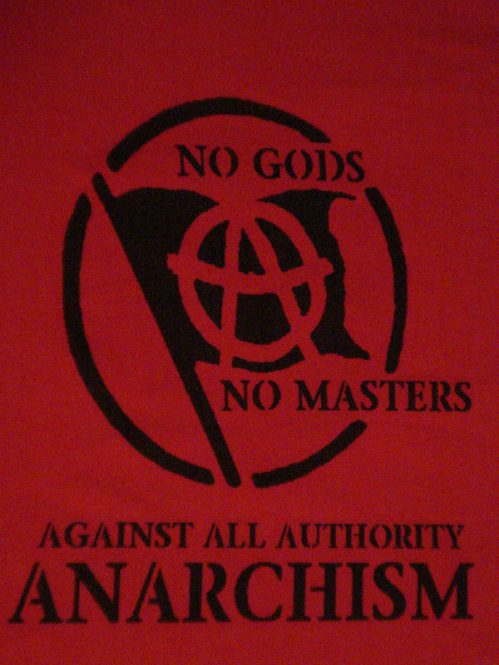
Photo by A Syn.
At each step it needs to have at its disposal a specific factor to lead each social group and even each man imperceptibly closer to communism, however slightly. And this is so in every area: in religious, political, social, and economic convictions; in cultural attitudes; in artistic preferences; and in the ways of being and acting in the family, in the workplace, and in society.
A. The Two Great Goals of Revolutionary Psychological Warfare
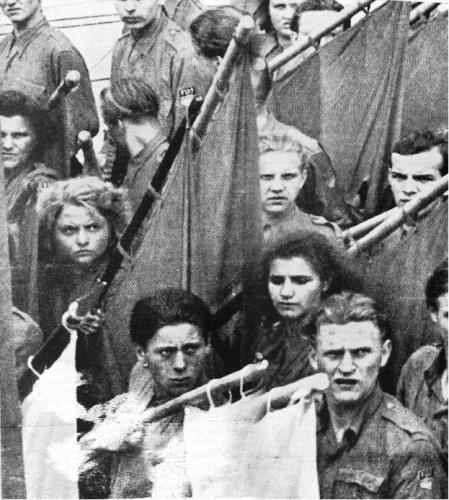
Communist youths in a demonstration in Berlin.
Given the Third Revolution’s present difficulties in carrying out ideological recruitment, the most useful of its activities is aimed not at its friends and sympathizers, but at the neutrals and its adversaries:
a. to deceive and slowly put the neutrals to sleep;
b. to divide at every step, disarticulate, isolate, terrorize, defame, persecute, and block its adversaries.

A DEI rally at the University of Berkeley. Photo by Quinn Dombrowski.
These are, in our view, the two great goals of revolutionary psychological warfare.
In this way, the Third Revolution becomes capable of winning – not so much by increasing the number of its friends as by destroying its adversaries.
Obviously, to carry on this warfare, communism mobilizes all the means of action it possesses in Western countries as a result of the apogee attained there by the Third Revolution’s offensive.
B. Total Revolutionary Psychological Warfare: A Result of the Third Revolution’s Apogee and Current Problems

Total revolutionary psychological warfare therefore results from a combination of the two contradictory factors previously described: on the one hand, communism’s peak of influence over almost all key points of the great machine that is Western society; on the other, its diminishing ability to persuade and lead the profound levels of Western public opinion.
4. The Third Revolution’s Psychological Offensive Within The Church

Richard M. Nixon at the Vatican meeting with Pope Paul VI in 1970.
It would be impossible to describe this psychological warfare without carefully examining its development in what is the very soul of the West, that is, Christianity, and more precisely the Catholic religion, which is Christianity in its absolute fullness and unique authenticity.
A. The Second Vatican Council

Second Vatican Council. Photo by Lothar Wolleh.
Within the perspective of Revolution and Counter-Revolution, the greatest success attained by the smiling post-Stalinist communism was the Second Vatican Council’s enigmatic, disconcerting, incredible, and apocalyptically tragic silence about communism.
It was the desire of this Council to be pastoral and not dogmatic. And, in fact, it did not have a dogmatic scope. But its omission regarding communism might make it go down in history as the apastoral Council.
We shall explain the special sense in which we make this statement.

Swarm of bees in the air. Photo by Waugsberg.
Imagine an immense flock languishing in poor, arid fields and being attacked on all sides by swarms of bees and wasps and birds of prey. The shepherds begin to irrigate the fields and drive away the swarms and birds. Can this activity be termed pastoral? In theory, certainly.
However, if at the same time the flock were under attack by packs of voracious wolves, many of them covered with sheepskins, and the pastors fought against the insects and birds without making any effort to unmask or drive away the wolves, could their work be considered pastoral, proper to good and faithful shepherds?
In other words, did those in the Second Vatican Council who wished to scare away the lesser adversaries but gave free rein — by their silence — to the greater adversary act as true pastors?

A pre-Vatican II habit. One of the many changes that were made as a result of the Second Vatican Council. Photo Bundesarchiv, Bild 121-0320 / CC-BY-SA 3.0
Using “aggiornate” tactics (about which the least that can be said is that they are contestable in theory and proving ruinous in practice), the Second Vatican Council tried to scare away, let us say, bees, wasps, and birds of prey. But its silence about communism left full liberty to the wolves. The work of this Council cannot be inscribed as effectively pastoral either in history or in the Book of Life.
It is painful to say this. But, in this sense, the evidence singles out the Second Vatican Council as one of the greatest calamities, if not the greatest, in the history of the Church. From the Council on, the “smoke of Satan”7 penetrated the Church in unbelievable proportions. And this smoke is spreading day by day, with the terrible force of gases in expansion. To the scandal of uncountable souls, the Mystical Body of Christ entered a sinister process of self-destruction, as it were.

1. See Introduction and Part I, Chapter 3, 5, A-D.
2. We speak of infiltration of communism into the various churches. It is indispensable to register that this infiltration is a supreme danger to the world, specifically in so far as it is carried on in the Holy Roman Catholic and Apostolic Church. The reason for this is that she is not merely a species of the genus churches. She is the only living and true church of the living and true God, the only Mystical Spouse of Our Lord Jesus Christ. In relation to the other churches, she is not a greater and more brilliant diamond among smaller and less brilliant one: She is the only true diamond among “similars” made of glass.
3. In February of 1990, the author released a manifesto titled “Communism and Anti-communism on the Threshold of the Last Millennium’s Last Decade.” An earnest questioning of communist leaders in both East and West regarding perestroika, it was published in 21 newspapers of 8 countries and had wide repercussions, especially in Italy. – Ed.
4. Mikhail Gorbachev, Perestroika: New Thinking for Our Country and the World (New York: Harper & Row, 1987), p. 34.
5. This vast anti-socialist saturation in Western Europe, although fundamentally a reinvigoration of the center and not of the right, is of indisputable importance in the fight between the Revolution and the Counter-Revolution. For, to the extent that European socialism senses it is losing its rank and file, its leaders will have to display a distancing from and even a wariness of communism. In turn, the centrist currents, in order and not to be taken for socialists by their own electorates, will have to manifest an even more accentuated anticommunist position. And the right wing of the centrist parties will have to declare itself to be even militantly anti-socialist.
6. Part I, Chapter 5.
7. Cf. sermon of Paul VI on June 29, 1972.
Plinio Corrêa de Oliveira, Revolution and Counter-Revolution (York, Penn.: The American Society for the Defense of Tradition, Family, and Property, 1993), Part III, Ch. I & II, pg. 122 – 145.