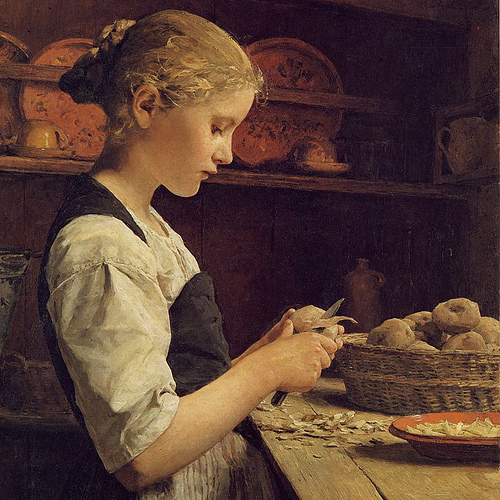
Girl Peeling Potatoes painted by Albert Anker
As already noted in a previous post, the potato was one of the plants brought to the Old World after Christopher Columbus’s discovery of the Americas.
While the potato is used extensively throughout Europe today–German average potato consumption is 150 lbs per person per year–in its first years, the potato struggled for acceptance. In France, wheat and bread were the staples and the lowly potato was scorned.

Portrait of Antoine Parmentier painted by François Dumont
Antoine-Augustin de Parmentier (1737-1813), an eminent physician who wanted to introduce the potato into the French diet, decided that the best way to break through the prejudice was to recruit the good offices of King Louis XVI and Queen Marie Antoinette. If they made the potato fashionable, the rest of society would follow suit; and follow they did.

Potato flowers
Several stories are told. In one of them, Parmentier is said to have given the royal couple some potato flowers when they were walking in the gardens of Versailles. The Queen put some of the little flowers in her hair. The king put one in his buttonhole. The nobles and ladies in their retinue did the same and the incident became a topic of conversation throughout France.
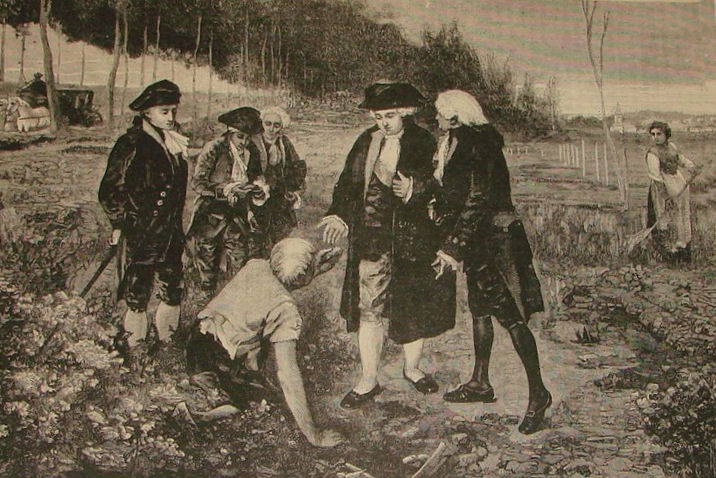
1886 engraving of Parmentier showing potatoes to Louis XVI
Another story tells how the king gave Parmentier some acreage for the growing of potatoes. Walls were put up and a guard established to protect the garden. The air of mystery aroused people’s curiosity, which was doubled when guards accepted bribes to allow people to dig up potatoes. All of this staging encouraged people to look at the humble tuber from a new perspective.

This statue of Antoine-Augustin Parmentier showing him distributing potatoes is located in the Parmentier Métro Line 3 Terminal in Paris. The Parmentier Métro opened in 1904 and was named after him.
All of these efforts received their reward and the potato was enshrined for good in French cuisine in 1785. In that year, famine struck northern France, but the poor were able to survive, thanks to the lowly potato. The death of many by starvation had been avoided.