St. Jerome, Father and Doctor of the Church
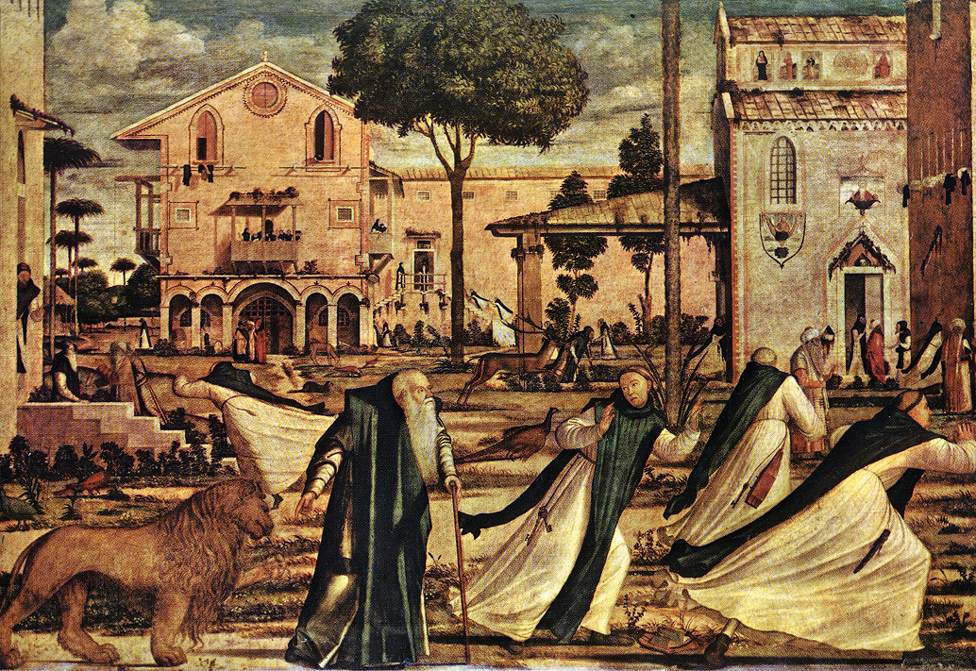
Painting of St Jerome and the Lion by Vittore Carpaccio
Born at Stridon, a town on the confines of Dalmatia and Pannonia, about the year 340-2; died at Bethlehem, 30 September, 420.
He had a brother much younger than himself, whose name was Paulinian. His father, called Eusebius, was descended from a good family, and had a competent estate; but, being persuaded that a good education is the most precious inheritance that a parent can leave to his children, took great care to have his son instructed in piety, and in the first principles of literature at home, and afterwards sent him to Rome, probably about 360, where he was baptized. St. Jerome had there, for tutor, the famous pagan grammarian Donatus, (well known for his commentaries on Virgil and Terence,) also Victorinus the rhetorician, who by a decree of the senate was honored with a statue in Trajan’s square.
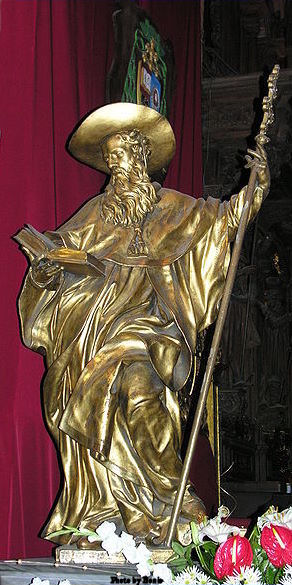
Statue of St. Jerome in St. John Cathedral in Wrocław
In this city he became master of the Latin and Greek tongues, read the best writers in both languages with great application, and made such progress in oratory, that he for some time pleaded at the bar: but being left without a guide, under the discipline of a heathen master, in a school where an exterior regard to decency in morals was all that was aimed at, he forgot the sentiments of true piety, which had been instilled into him in his infancy, neglected sufficiently to restrain his passions, and was full only of worldly views.
Being arrived at man’s estate, and very desirous of improving his studies, he resolved upon traveling, in order to further this design. St. Jerome in his first journeys was conducted by the divine mercy into the paths of virtue and salvation. A vehement thirst after learning put him upon making a tour through Gaul, where the Romans had erected several famous schools, especially at Marseilles, Toulouse, Bourdeaux, Autun, Lyons, and Triers. This latter was esteemed an imperial city, being in that age frequently honored with the presence of the emperors, when Rome, by the attachment of many powerful senators to idolatry, and their regret for the loss of their ancient liberty and privileges, was not so agreeable a residence to its princes. The Emperor Gratian, a learned man, and a great lover of learning, who appointed, out of his own revenue, fixed salaries for the public masters of rhetoric, and of the Greek and Latin languages in all great cities, distinguished the schools of Gaul with special favors, and above the rest, those of Triers, to whose professors he granted greater salaries than to those of other cities, and whither he drew Ausonius from Bourdeaux.
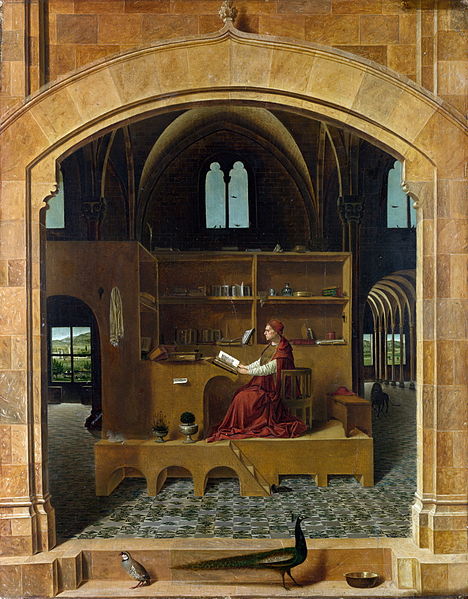
Painting of St. Jerome by Antonello da Messina
It had been St. Jerome’s greatest pleasure at Rome to collect a good library, and to read all the best authors: in this, such was his passion, that it made him sometimes forget to eat or drink. Cicero and Plautus were his chief delight. He purchased a great many books, copied several, and procured many to be transcribed by his friends. He arrived at Triers with his friend Bonosus not long before the year 370, and it was in that city that the sentiments of piety which he imbibed in his infancy, were awakened, and his heart was entirely converted to God; so…