As we have seen, the hereditary transmission of status through the family has been studied and verified by many sociologists. In addition to status, qualities can also be transmitted by the family. Each generation transmits to the next its moral and cultural values. This transmission of qualities within a family throughout generations is affirmed by Burt, who acknowledges that this is a normal occurrence in American society.
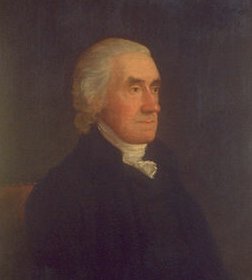
Robert Treat Paine signer of the Declaration of Independence. His descendant, Lyman Paine married Ruth Forbes of the Forbes family and the great-granddaughter of Ralph Waldo Emerson.
“This succession of merit [from one generation to another]…is hereditary. It most certainly keeps families going, it most certainly establishes family prestige, it most certainly adds to American society a strong past and present tinge of birth, gentility, tradition, and what have you; all those things which are the appendages if not the crude essence of aristocracy.”1
In turn, Walter Muir Whitehill observes that
“many families of high social status have maintained an extraordinary level of national distinction, generation after generation. This is the American version of aristocracy, an aristocracy of accomplishment, achieved rapidly by conspicuous and intelligent effort, but imposing upon succeeding generations a responsibility quite as binding, and sometimes as hindering, as the traditional aristocracies of Europe.”2
In one of his allocutions to the Roman Patriciate and Nobility, Pius XII refers specifically to the transmission of moral and spiritual qualities of a family from one generation to another.3
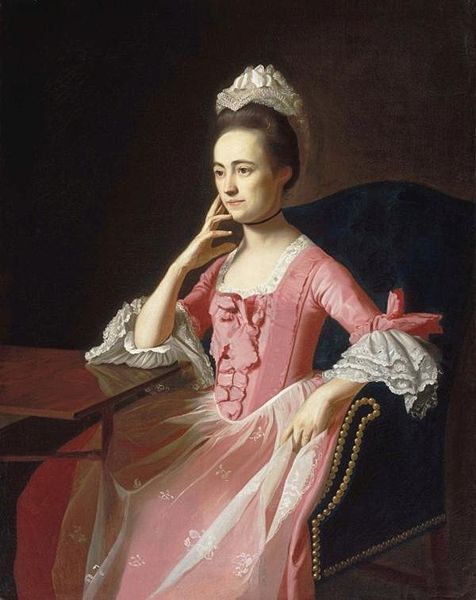
Dorothy Quincy Hancock Scott, daughter of Justice Edmund Quincy, the wife of John Hancock and the cousin of Abigail Smith Adams, the wife of John Adams.
The hereditary transmission of merit, while intimately related to the transmission of status described in the previous section, has received little attention, and may appear strange to many. But it has been studied by sociologists like Bernard Faber, who admits the hereditary transmission of something beyond mere material patrimony.
“Possibly the most valuable property of a kin group aside from wealth is its position among other kinship units in terms of honor and status, a position defined by the content of the symbolic estate [in other terms a moral patrimony] that the kinship group possesses. This symbolic estate includes the achievements and honors of those individuals, both living and dead, related to the kinship group. More generally, families may become known by a great ancestor (real or fictitious), wealth, or personal achievements. One role of kinship groups in social differentiation is to perpetuate and enhance these symbolic estates, which become an important part of the family culture.”4



